
What I Found Inside One Panel — and Why It Matters
I opened up an electrical panel for an inspection recently, and it turned out to be a good teaching moment. Nothing in it had burned the house down — yet — but it had four problems I see all the time. Here’s what they were, and why each one matters even if your lights work fine.
1. Double-tapped neutrals
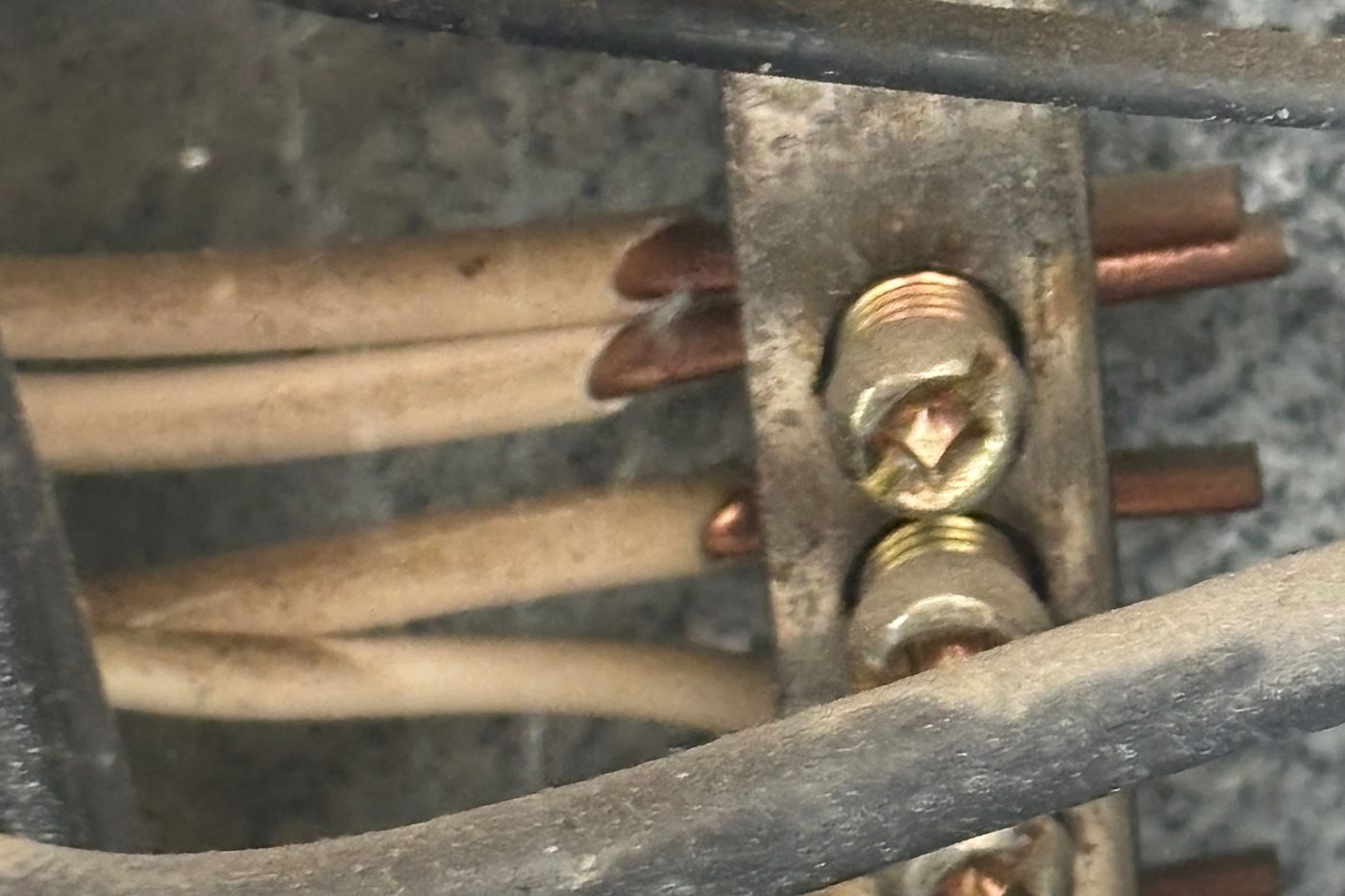
Inside your panel is a bar where all the white “neutral” wires land, and each one is supposed to get its own screw. In this panel, several screws had two wires pinched under them.
Why it matters: a screw designed to clamp one wire can’t grip two evenly. Over time those connections loosen, and a loose connection means heat, arcing, and flickering — and it’s a fire risk hiding behind a dead-quiet panel cover. It also means you can’t safely disconnect one circuit without disturbing another. The fix is simple: give every wire its own seat.
2. White wires used as hot conductors, never re-marked
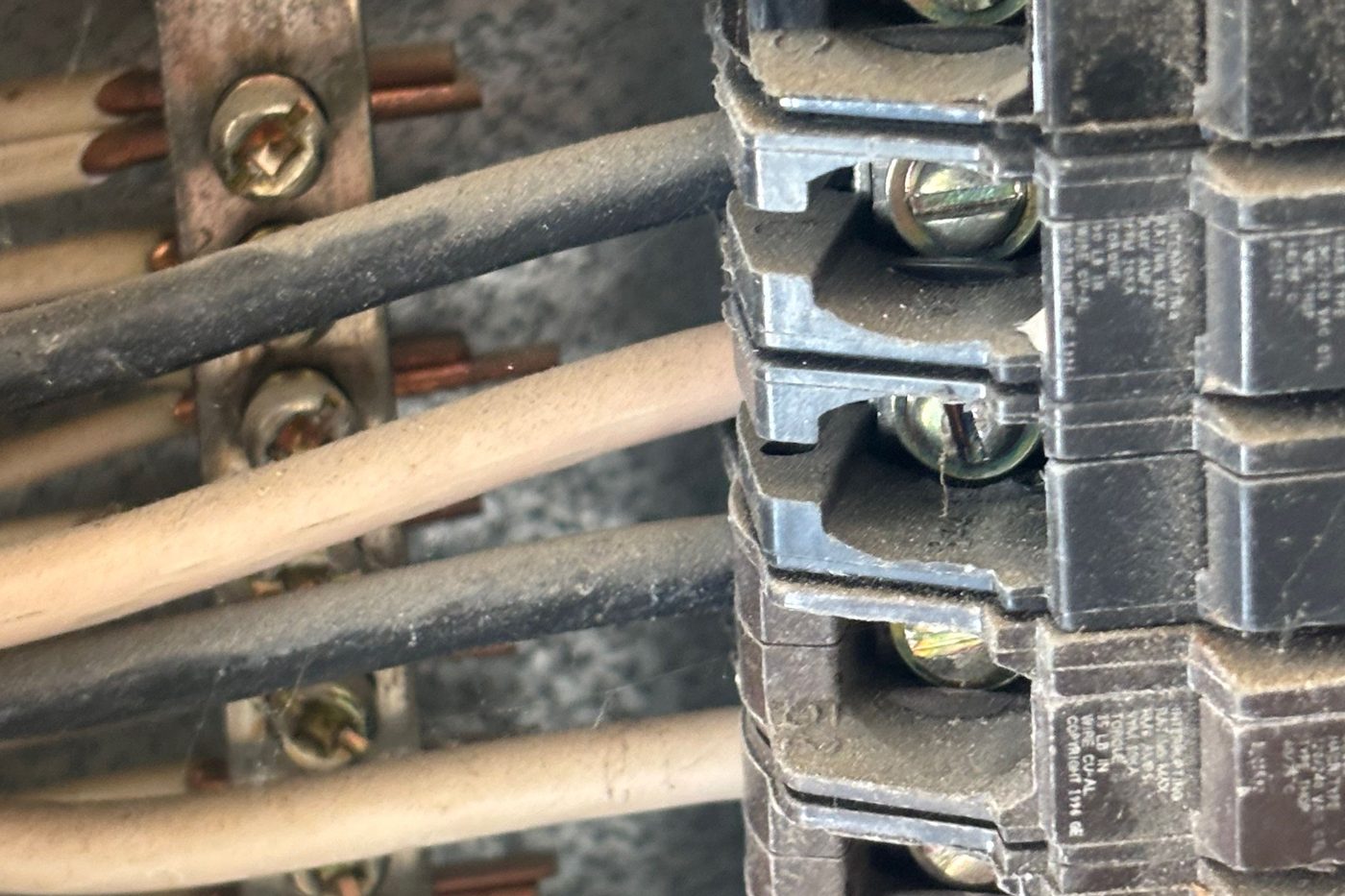
In the trade, white insulation means “neutral” — the wire that’s supposed to be at zero volts. There are legitimate situations where a white wire has to carry full power, but when that happens, the code requires it to be re-identified — wrapped with black or red tape so the next person knows it’s live. These weren’t marked.
Why it matters: the next electrician, home inspector, or handy homeowner who opens that box will see white and assume it’s safe. That assumption can put someone in the hospital. A two-cent piece of tape prevents it.
3. Sharp-tipped panel screws
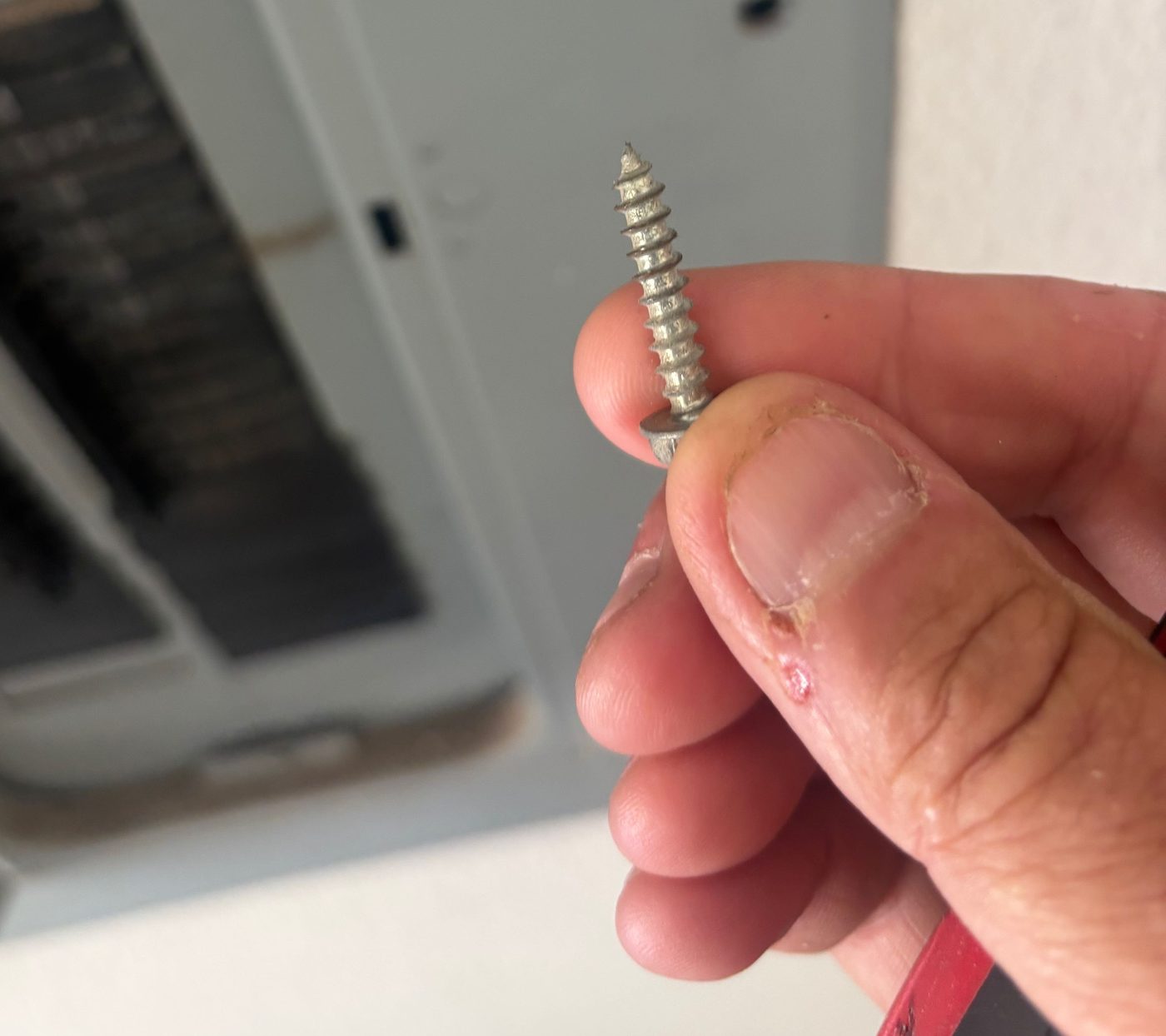
The screws that hold your panel cover on are supposed to have blunt tips. Somewhere along the way, someone lost the originals and grabbed pointed screws from a drawer.
Why it matters: behind that cover is a bundle of live wires, and a sharp screw driven blind into the panel can pierce insulation and energize the metal cover itself — meaning the next person to touch the panel could get shocked, or the screw can sit there slowly damaging a wire until it faults. Blunt screws exist for exactly this reason.
4. A 2-pole breaker with a broken handle tie
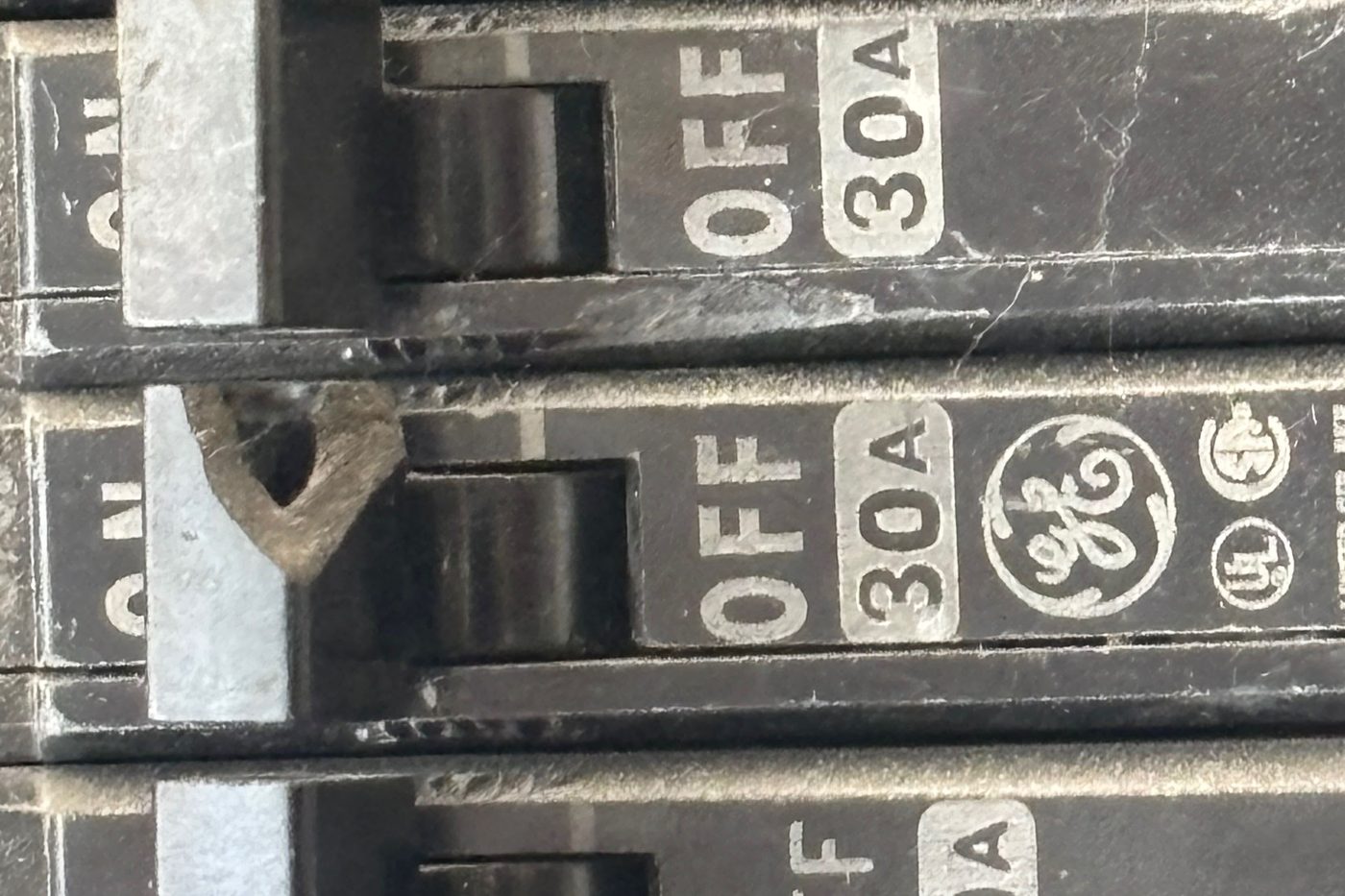
Big appliances like dryers, ranges, and AC units run on 240 volts, which takes two breakers working as a team — joined by a tie so they switch on, off, and trip together. This one’s tie was broken.
Why it matters: if one side trips or gets switched off and the other doesn’t, the appliance looks dead while half the circuit is still live. Someone working on that “off” circuit is actually working on a live one. The tie isn’t cosmetic — it’s what guarantees that off means off.
Why a panel inspection is worth it
None of these problems announce themselves. The house was running fine, and the owner had no reason to suspect a thing. That’s the case for a periodic panel inspection: the issues that hurt people and start fires are almost always ones you can’t see with the cover on.
If your panel hasn’t been opened by a licensed electrician in years — or if a previous owner did their own wiring — it’s worth a look.
Acoustic Electric handles panel inspections, panel upgrades and service-entrance work, and electrical troubleshooting and repair across Princeton and Collin County.